ProScix Solutions
Precision temperature control from -196°C to +50°C. Trusted by leading biopharma companies worldwide for reliable sample storage and freeze-thaw systems.
Protein
Conformation
Analysis
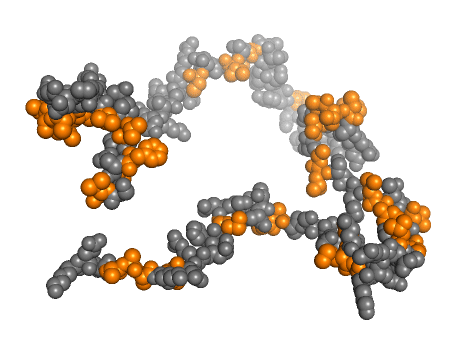
Proteins are the primary molecular machines of biological systems. They are widely studied in terms of both structure and function. Proteins fold into specific three-dimensional (3D) structures, which are determined by their amino acid sequences. Protein conformation is usually defined as the spatial arrangement of its constituent atoms, which determine the overall shape of the macromolecule. However, proteins are not rigid molecules; they change their conformations rapidly in a solution linked to their biological functions. Some of the most striking examples of protein dynamics and conformational changes include protein folding and unfolding, catalysis, mediation of cell motility, transport through membranes, cell replication, transcription and translation, and assembly and disassembly of protein complexes in general.
Different conformational changes resulting from the intrinsic flexibility of a protein are linked to particular energy levels and timescale, for example, protein dynamics, where the backbone of a protein is involved, is observed during protein folding. During protein folding, the global conformational changes are introduced by the rotation around the dihedral angles around the planer peptide bond and associated side-chain reorientations. On the other hand, some localized changes with reorientations of a few residues and small torsional changes in a particular region of the main chain can also be observed during many biological phenomena like enzyme catalysis, signaling, etc. Dynamic and thermodynamic properties of a protein are encoded in the protein sequences that can be modified through gene mutations during biological evolution according to the biological function the protein is destined to perform. The relationship between protein flexibility and function has been extensively studied; for example, in P53, high flexibility is a prerequisite for signaling regulation. Another example is microorganisms that survive in extreme environments; proteins and enzymes isolated from these microorganisms are functional and stable under extreme conditions. This is due to gene mutations that modify the structural dynamics of enzymes and shift the active conformation distribution curve to extreme conditions.
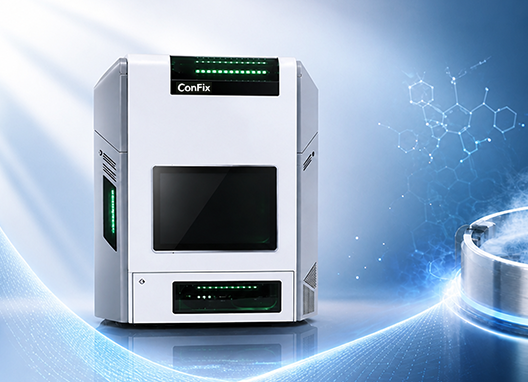
ConFix
ConFix is a new generation product from Proscix, designed for multi dimensional and multi parameter studies of biological samples
Combining label free fluorescence, differential static light scattering and dynamic light scattering technologies, ConFix characterizes protein status in 48 well plates under defined temperature conditions
Technology
Our platform combines label‑free NanoDSF, static and dynamic light scattering for high‑throughput analysis of protein stability, aggregation and molecular interactions.
Differential Scanning Fluorimetry(DSF)
New generation DSF is a modified differential scanning fluorimetry method which monitors intrinsic tryptophan and tyrosine fluorescence as a function of temperature, time, or denaturant concentration.
Dynamic Light Scattering(DLS)
Particle size can be determined by measuring the random changes in the intensity of light scattered from a suspension or solution. This technique is commonly known as dynamic light scattering (DLS), but is also called photon correlation spectroscopy (PCS) and quasi-elastic light scattering (QELS).
Dynamic Light Scattering(DLS)
Light scattering is a well established technique to investigate properties of particles in solutions. Information such as size, molecular weight, diffusion and interaction strength are obtained.